
The Munich Property Market in 2026 – the RIEDEL Market Report


Data status and data basis
All the analyses in this market report are based on the reference date of 30 June 2026. The standard land values relate to the reference date of 1 January 2026 and were published on 30 June 2026 on the ‘bodenrichtwerte-muenchen.de’ portal. The transaction and price data are taken from the property market reports of the Expert Committee on Land Values for the Munich Metropolitan Area for the years 2021 to 2025. Interest rate and economic data are as at June 2026.
All illustrations are our own graphical adaptations based on the relevant data set. The full list of sources can be found at the bottom of this page.
The Munich property market in 2026: stabilisation, selectivity and new opportunities
From RIEDEL’s perspective, the Munich market for high-end residential property is in a phase of stabilisation at the start of 2026.
Following the significant adjustments seen between 2022 and 2024, market activity has noticeably calmed down. However, a return to the dynamics of the low-interest-rate years is not to be expected.
Rather, the market has re-established itself at a more realistic price level – characterised by greater selectivity, more stringent financing conditions and a regulatory framework that has undergone lasting changes.
Interest rate trends and the macroeconomic environment
The trend in mortgage interest rates remains one of the key factors influencing the property market.
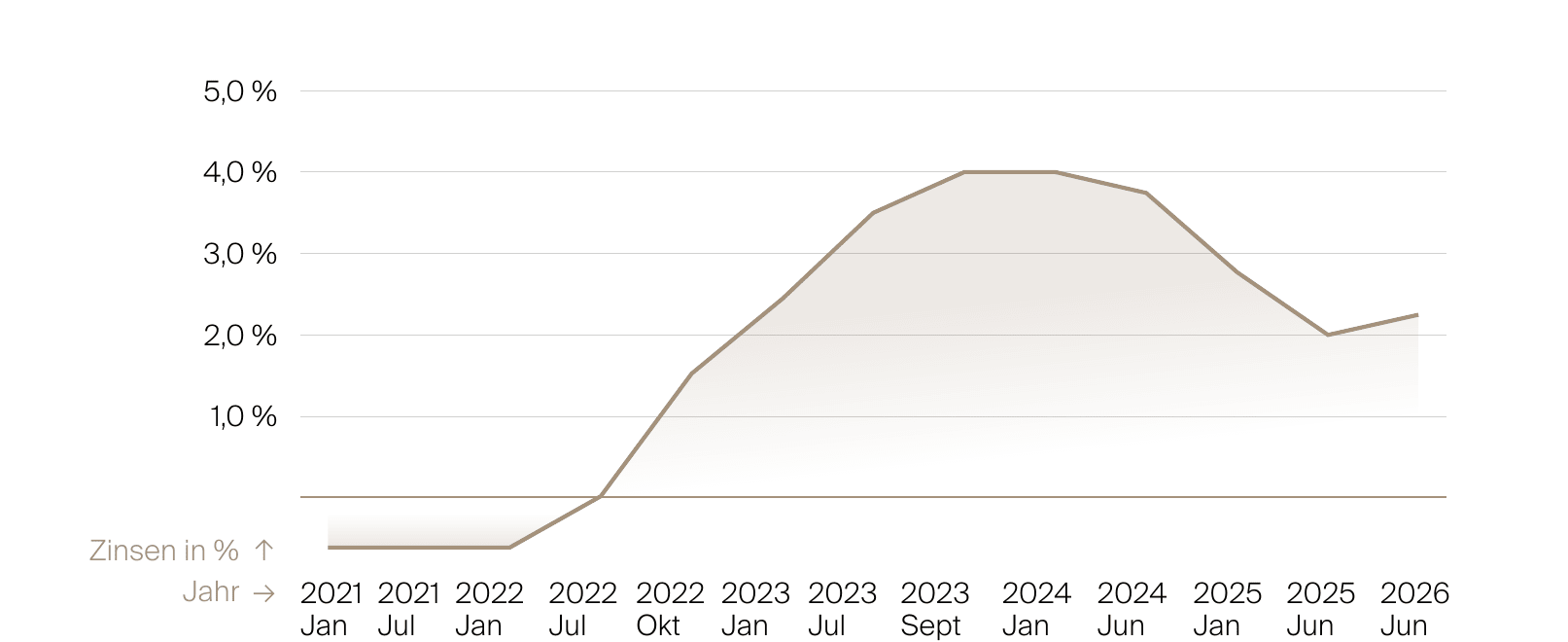
On 11 June 2026, the European Central Bank raised its key interest rate for the first time since September 2023 – by 25 basis points to 2.25 per cent (deposit rate).
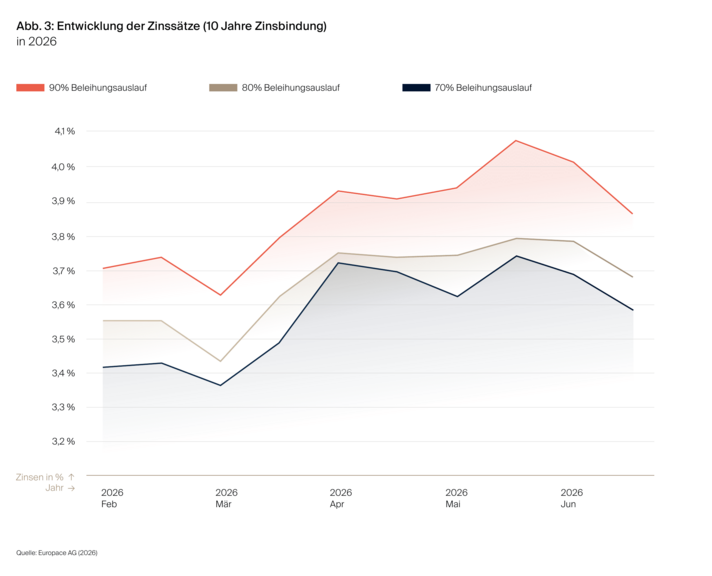
This move comes against the backdrop of a renewed rise in inflation in the euro area, which stood at 3.2 per cent in May 2026 – well above the ECB’s target of 2.0 per cent. Mortgage rates currently range – depending on the term and loan-to-value ratio – from around 3.6 to 4.2 per cent per annum.
A key driver of the renewed inflationary pressure is the rise in energy prices resulting from the geopolitical situation in the Middle East. This development limits the scope for falling financing costs; market observers consider at least one further interest rate hike by the ECB in 2026 to be possible.
The ECB itself has raised its inflation forecast for 2026 to an average of 3.0 per cent and lowered its forecast for economic growth in the eurozone to 0.8 per cent. For the property market, this means:
financing decisions are being weighed up more carefully, transactions often take longer, and sound economic fundamentals are becoming increasingly important.
In Munich’s premium segment, however, the direct dependence on short-term interest rate movements is more limited than in market segments with higher levels of leverage.
Regulatory framework and the supply side
In 2026, too, statutory requirements will continue to have a significant impact on the property market.
Regulations on energy efficiency, modernisation and building codes make it more challenging for owners, developers and investors to develop, renovate or adapt existing buildings.
In Munich, in addition to federal and state regulations, local political decisions and the practices of the relevant planning authorities also come into play. These can further restrict construction activity – particularly where building regulations, nature conservation, heritage protection and urban planning objectives intersect.
According to analyses by IVD Süd, only around 4,000 new residential units were approved in Munich between January and October 2025.
This represents a 28 per cent decline compared with the same period last year and a 55 per cent drop compared with the ten-year average for the years 2015 to 2024.
In a market such as Munich, where available plots of land are scarce and prime locations can only be replicated to a limited extent, this trend exacerbates the structural shortage of supply.
For existing properties in good and very good locations, this scarcity may have a stabilising effect in the long term.
Demographics and location quality
The long-term fundamentals of the Munich property market remain robust.
According to the population forecast by the City of Munich (Planning Forecast 2025–2045), the population is expected to rise by around 14 per cent to 1.83 million by 2045. This corresponds to an increase of around 226,000 people.
This sustained influx is putting lasting pressure on the housing market – particularly in sought-after inner-city and established residential areas.
Added to this is Munich’s strong position as a centre for business, innovation and research. The high concentration of internationally active companies, technology centres, universities and scientific institutions creates a stable basis for demand.
For the high-end residential segment, this combination of economic strength, purchasing power, international appeal and limited supply is a decisive factor in long-term value retention.
Trends in demand
In the current market environment, a cautious shift in demand from the rental market to the owner-occupier market can be observed.
Rising rents, the limited availability of high-quality rental properties and the desire for long-term planning certainty mean that affluent owner-occupiers and investors are once again giving more serious consideration to purchase options.
At the same time, demand has become more selective.
Buyers are scrutinising properties more closely, comparing them more thoroughly and assessing location, condition, energy efficiency, architecture and development potential in a more nuanced way than during the high-price phases of recent years.
Properties with a clear selling point are in particularly high demand – such as exceptional locations, compelling floor plans, high-quality fittings, architectural quality or a special rarity value.
Pricing in the luxury segment: differentiation at the highest level
In the Munich luxury property market, the differentiation that was already evident is continuing. Prime properties in particularly sought-after locations are largely holding their value.
In the case of exceptional properties, moderate price increases are once again being observed in individual instances – particularly where location, quality and limited availability create a particular scarcity.
By contrast, properties in need of modernisation, with energy efficiency shortcomings or limitations in terms of location and quality are under greater pressure to adjust their prices.
Pricing today is more precise, data-driven and transparent than during market phases strongly driven by demand.
The market is therefore not moving uniformly upwards or downwards. Rather, the individual quality of the property is more decisive than ever in determining price, time on the market and the success of a transaction.
Opportunities for sellers and buyers
For sellers, the current market continues to offer attractive opportunities, provided that pricing strategy, positioning and targeting are carefully coordinated.
Demand remains strong, particularly in the high-end segment. However, it is increasingly focused on properties whose value proposition is clear, transparent and robust.
For buyers, the current market phase presents opportunities that were limited during the years of very high demand. Greater market transparency, a more varied range of properties on offer and more objective pricing create better conditions for making well-informed decisions.
It is important to identify sustainable quality and to distinguish between short-term market fluctuations and long-term intrinsic value.
Conclusion
In 2026, the Munich market for high-end residential property is stable, discerning and increasingly diverse. The ECB’s latest interest rate rise, geopolitical uncertainties and regulatory requirements are creating a more complex market environment.
In the short term, therefore, a widespread surge in prices is not to be expected. Rather, purchase prices are likely to move largely sideways for the time being; in less sought-after locations, for properties in need of renovation or for properties priced out of line with the market, isolated price pressure remains possible. High-quality properties in very good and sought-after locations in Munich, on the other hand, are proving significantly more resilient.
In the medium to long term, Munich’s strong fundamentals, sustained high demand, structural supply shortages and historically low – or still insufficient – new-build activity point to the location’s high value retention.
As soon as financing conditions and planning certainty improve again, further stabilisation and, in the long term, a return to moderate price growth can be expected, particularly in the high-end segment.
For owners, buyers and investors, precise analysis, realistic valuation and excellent market knowledge are more important than ever in this market phase. RIEDEL supports these decisions with sound expertise, a deep understanding of Munich’s premium segment and a commitment to providing our clients with a solid foundation for valuable property transactions.
Interest rate trends: Construction loan rates in 2026 will not follow the base rate

Trends and Forecasts for Construction Interest Rates in 2026
The geopolitical situation in the Persian Gulf has recently weighed heavily on energy prices, thereby creating renewed inflationary pressure. In Germany, inflation rose from 1.9 per cent in February to 2.7 per cent in March and 3.0 per cent in April 2026. The ECB responded in June with its first key interest rate rise since September 2023.
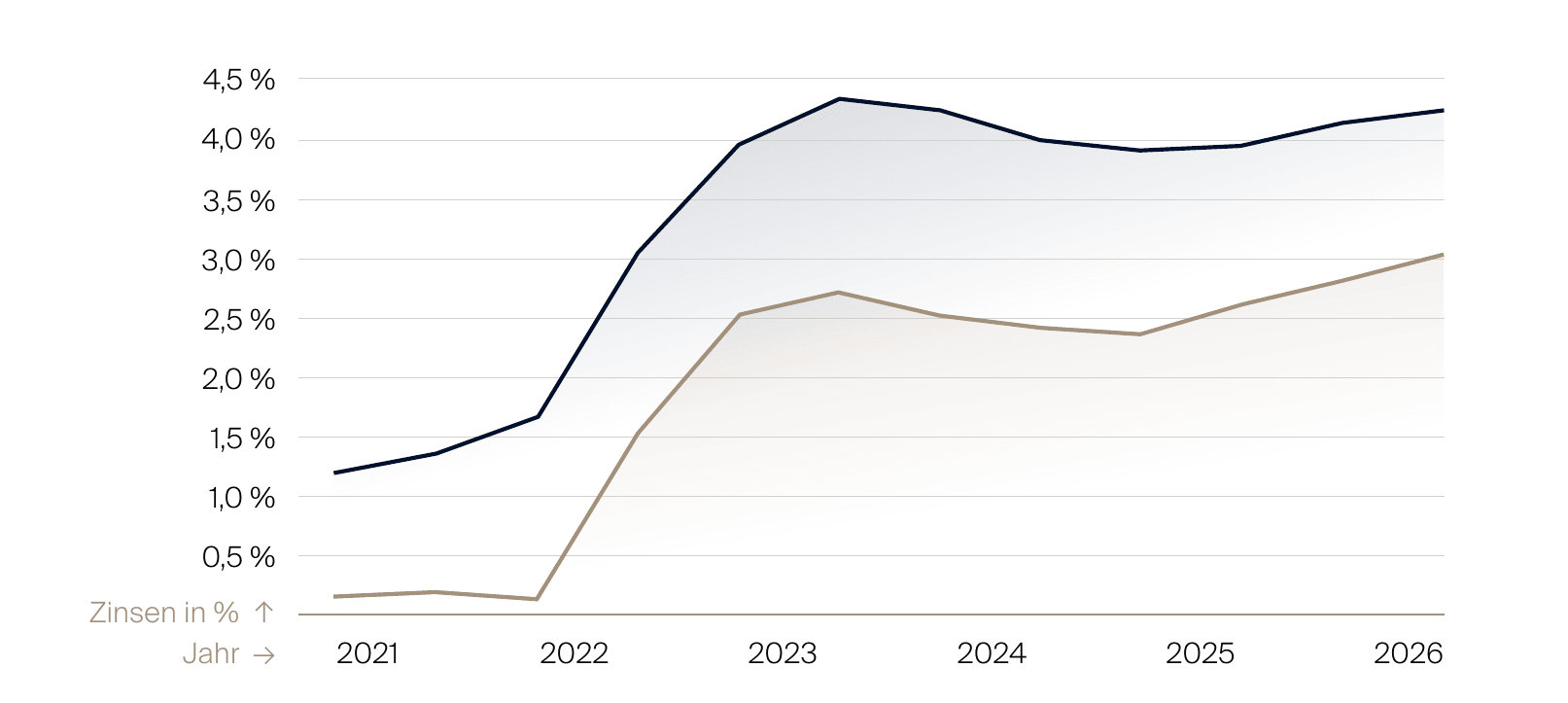
However, the trend in construction interest rates does not directly follow the ECB’s key interest rate. Rather, the key determinants are the yields on long-term government bonds, in particular the 10-year German government bond. Although the ECB gradually lowered its key interest rate between June 2024 and June 2025, mortgage rates remained largely stable.
The fact that mortgage rates are linked to the 10-year German government bond suggests that financing conditions could remain challenging for the foreseeable future. Higher government spending, investment in energy infrastructure and defence, as well as a changed inflationary environment, are reinforcing this trend.
Source of figures: Federal Statistical Office, as at June 2026
Current best rates (10-year fixed-rate mortgage)
As we have received many enquiries following the ECB’s latest interest rate adjustment asking whether this will now also lead to a rise in mortgage rates, we would like to explain this briefly:
The ECB’s interest rate cuts or rises do not have a direct impact on mortgage rates. Whilst the ECB primarily controls short-term money market rates, mortgage rates are mainly based on capital market rates. Consequently, mortgage rates may rise, fall or remain unchanged despite an ECB interest rate adjustment.
By the end of June 2026, mortgage rates had recovered somewhat and had fallen slightly. The interest rates shown in our chart are based on the latest market research from RIEDEL Finance. However, the actual financing terms always depend on individual factors such as the property, the loan-to-value ratio and the customer’s creditworthiness, and may therefore vary from case to case.
| Loan-to-value ratio | Interest rate (10-year fixed-rate period) |
|---|---|
| 90 % | 3.86% |
| 80% | 3.67% |
| 70% | 3.58% |
As at: Terms and conditions retrieved on 24 June 2026, market research by RIEDEL Finance
Munich market as a whole: more transactions, turnover remains virtually stable
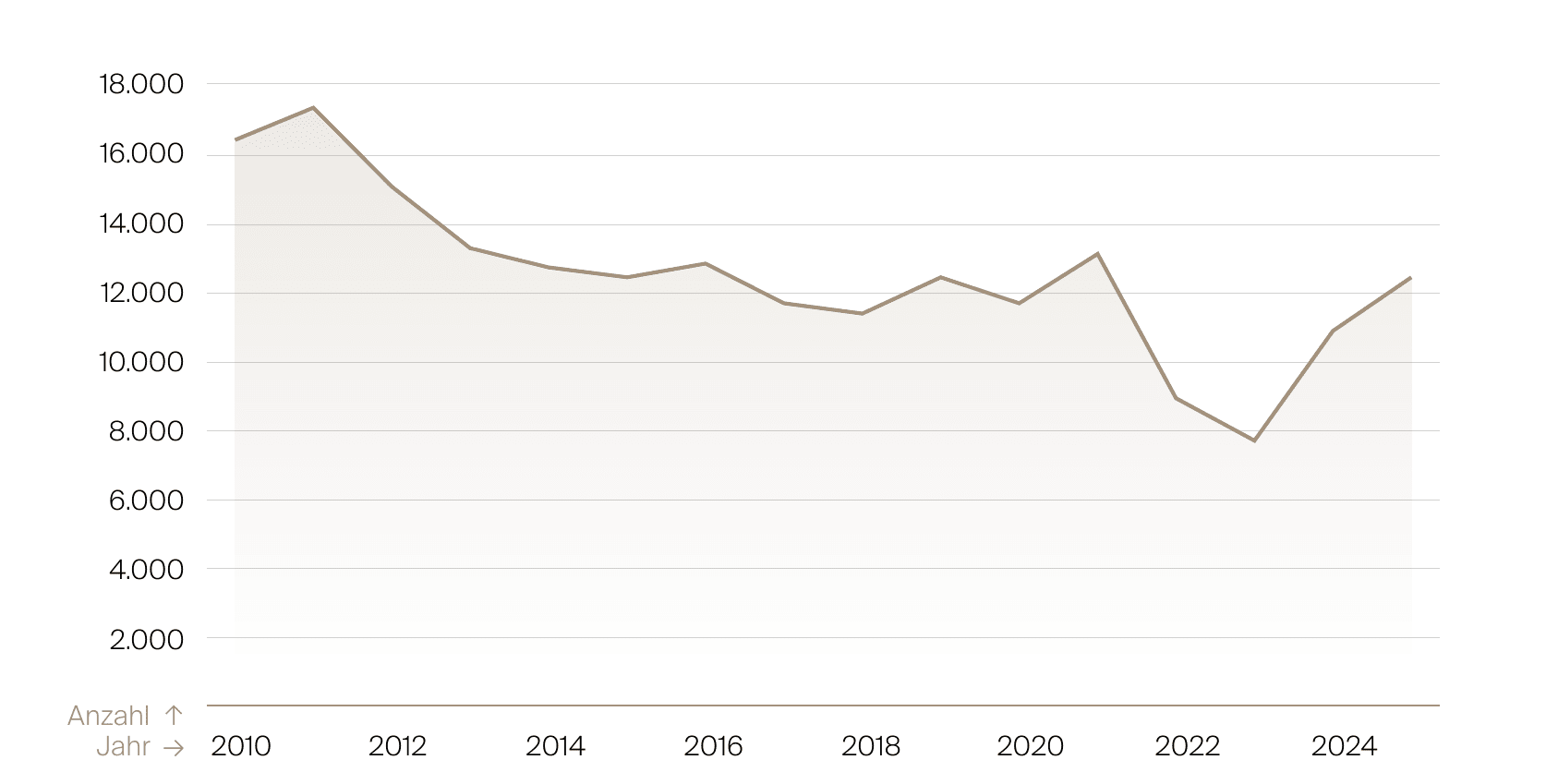
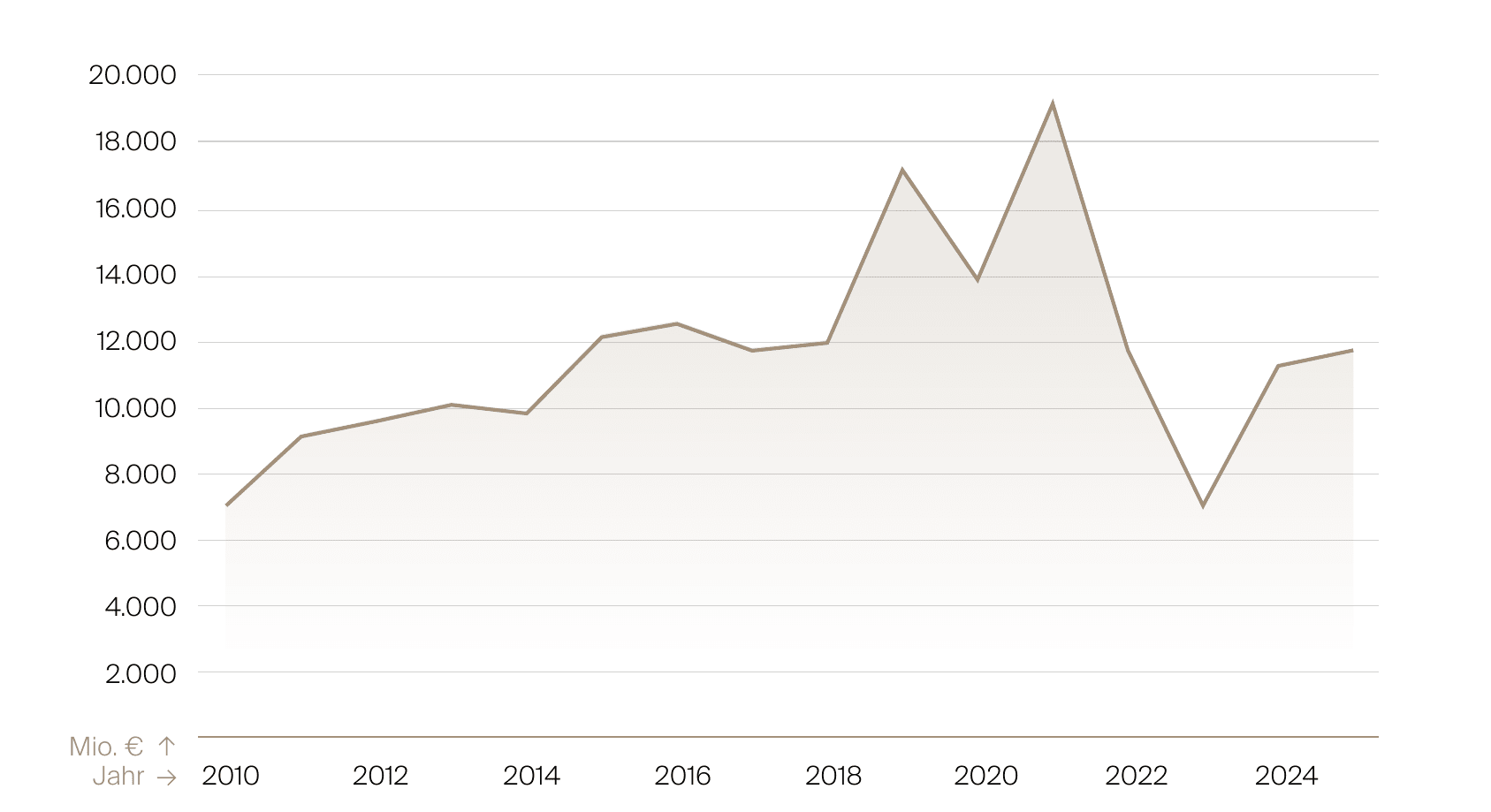
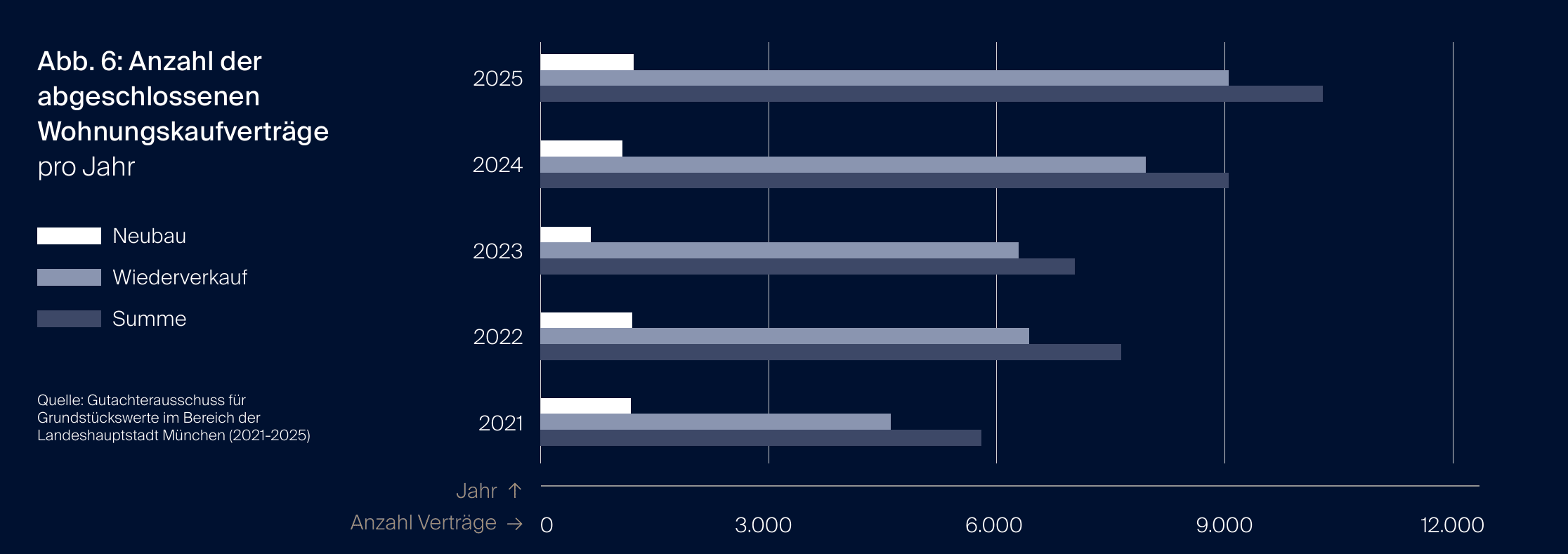
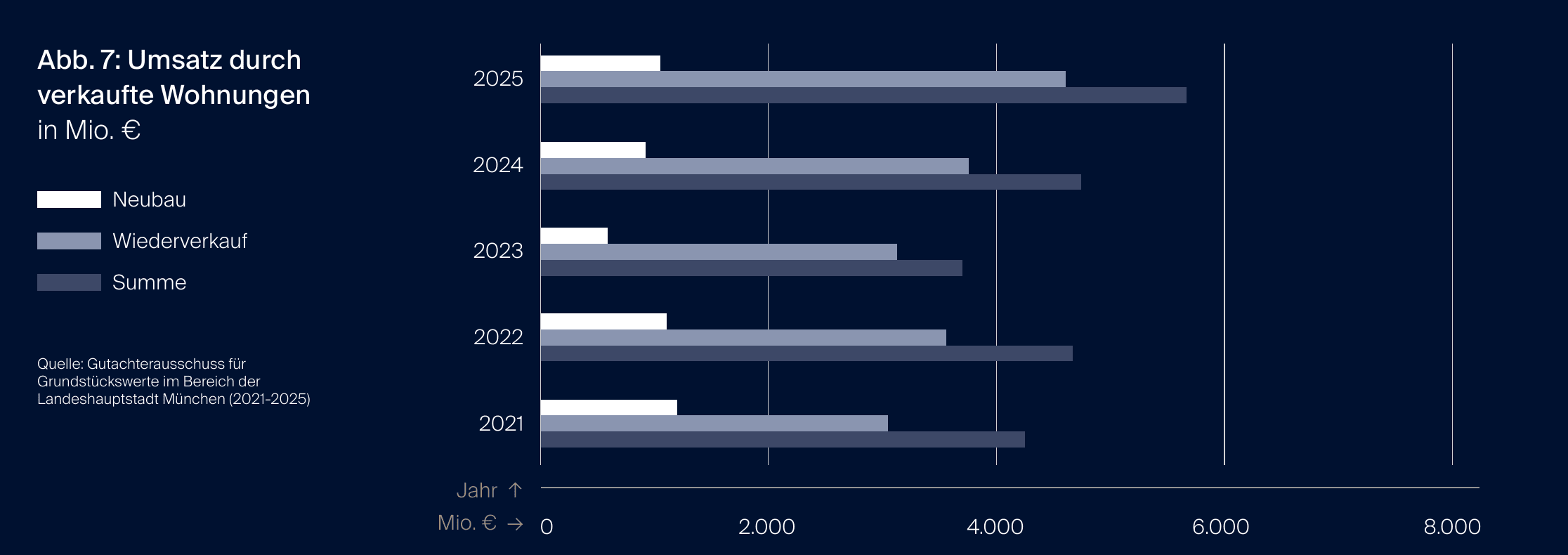
In 2025, the Munich property market once again recorded a higher number of completed sales contracts. By contrast, the value of transactions rose only slightly. This situation suggests a revival in market activity, although it does not yet indicate a broad return to previous transaction levels. The combination of an increase in the number of transactions alongside a virtually unchanged turnover could suggest that a shift in price levels is once again enabling more deals to be concluded.
Standard land values in Munich: current classification of land prices
RIEDEL analysis based on known transactions
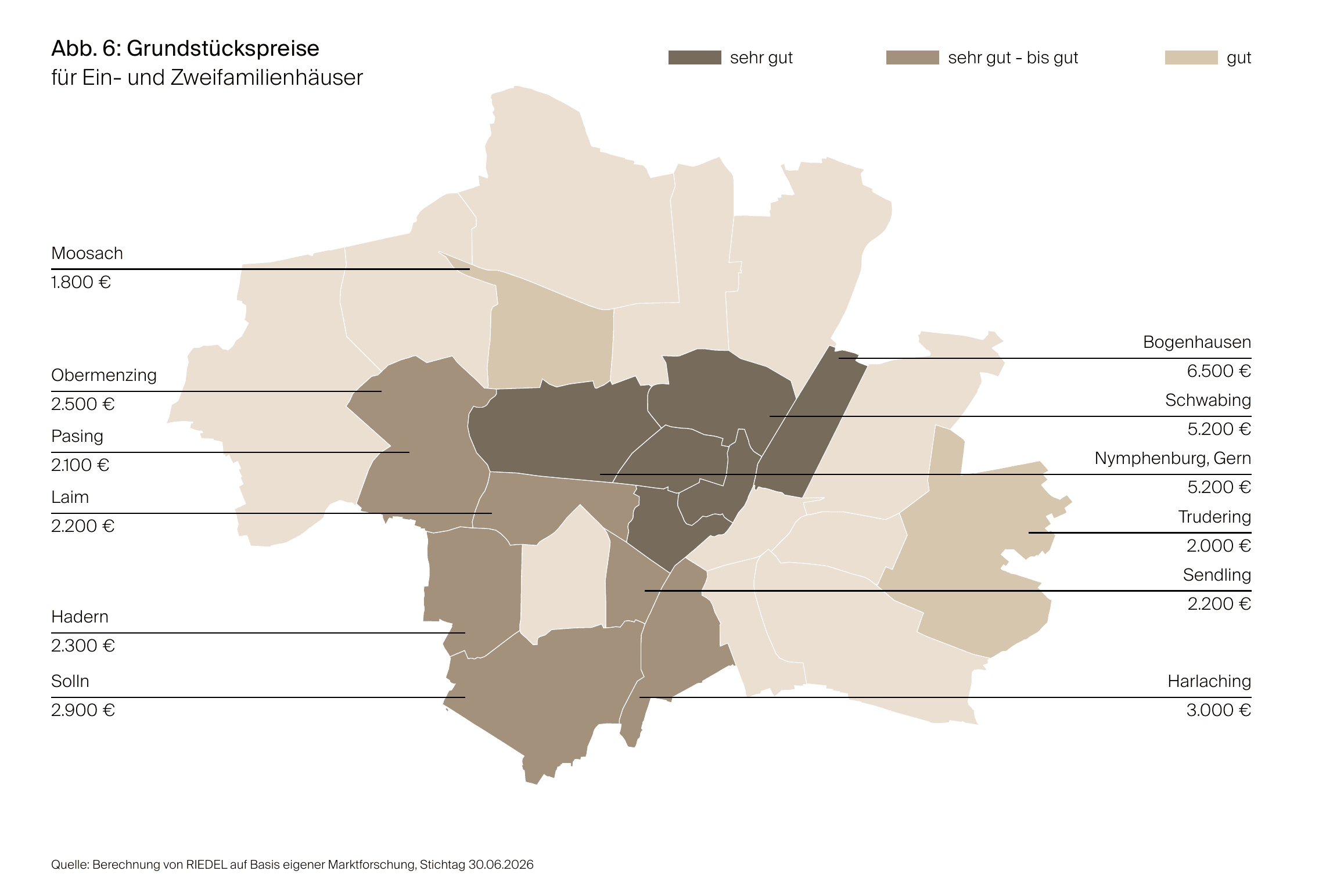
RIEDEL’s market research continuously monitors price trends in the districts shown, whilst also taking into account transactions that span individual standard land value zones. Developed plots are also included in the analysis. RIEDEL is therefore able to derive average land prices for the areas shown on the map based on known transactions and the publications of the Valuation Committee (standard land values as at 1 January 2026, 2025 Annual Report) as at 30 June 2026.
The values have been categorised according to the floor area ratios identified by the Valuation Committee in the respective area as typical for individual residential construction – in particular detached houses and semi-detached houses. Compared with our analysis from 2024, price reductions in the range of approximately 7 to 25 per cent can be observed in land values. Plots intended for multi-storey residential development were not included in this assessment, as they are subject to different market mechanisms.
Average land prices by district
The figures shown on the map in tabular form – average land prices for plots for detached and semi-detached houses, as at 30 June 2026:
| District | Land price in €/m² | Location quality |
|---|---|---|
| Bogenhausen | €6,500 | very good |
| Schwabing | €5,200 | Very good |
| Nymphenburg, Gern | €5,200 | Very good |
| Harlaching | €3,000 | very good – good |
| Solln | €2,900 | Very good – to good |
| Obermenzing | €2,500 | Very good – to good |
| Hadern | €2,300 | Good |
| Laim | €2,200 | Good |
| Sendling | €2,200 | Good |
| Pasing | €2,100 | Good |
| Trudering | €2,000 | Good |
| Moosach | €1,800 | Good |
Source: Calculation by RIEDEL based on its own market research, as at 30 June 2026
Land price trends
The standard land values published every two years by the Munich Expert Committee form an important basis for assessing land prices within the territory of the State Capital of Munich. The current standard land value maps, effective from 1 January 2026, were published on 30 June 2026 via the online portal ‘bodenrichtwerte-muenchen.de’.
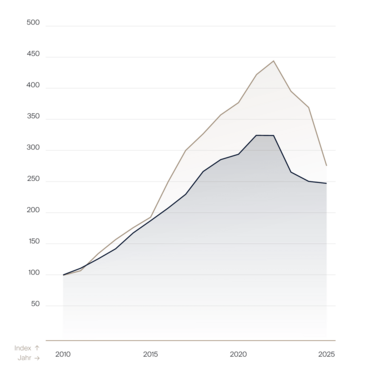
Compared with the reference date of 1 January 2024, the current standard land values show significant adjustments. In many cases, the decreases are in the double-digit range. The following figure, taken from the 2025 Property Market Report by the Expert Committee on Land Values in the Munich metropolitan area, provides a chronological overview of the development of residential land prices.
The standard land value maps show values for standard land value zones of varying sizes, depending on development and land-use possibilities. In some cases, these zones comprise only a few detached houses. Consequently, any interpretation should always take into account the respective micro-location and the underlying area delineations.
Different trends by type of use
Following their peak in 2022, prices for residential building land – both for detached houses and multi-storey residential development – initially fell largely in parallel, albeit from different starting points. In 2025, however, a markedly different trend emerged.
Whilst prices for detached housing plots declined only slightly, land for multi-storey residential development recorded an average fall of around 25 per cent within a year. This trend is likely to be linked in particular to rising construction costs coupled with falling sale prices for new-build flats.
Correction since the peak
The trend in residential building land prices shown here illustrates just how significantly the market environment has changed since the peak in 2022. Following years of rising land prices, prices for both land for detached houses and land for multi-storey residential buildings fell. Initially, the correction followed a relatively similar pattern in both segments, albeit at different price levels.
Since 2024, however, there has been a greater differentiation by type of use. Whilst land for detached housing has recently seen only a slight decline, land for multi-storey residential development recorded a significantly sharper fall in 2025. This trend has so far continued into 2026.
Current land price trends are not uniform, but are becoming increasingly differentiated – depending on the type of use and specific qualitative characteristics.
Land for multi-storey residential development under greater pressure
The adjustment in 2025 is particularly pronounced for land for multi-storey residential development. This development is likely to be primarily linked to changes in the costing of new-build projects. Rising construction costs, higher financing costs and a slight fall in sale prices for new-build flats are weighing on the profitability of property development projects. In these calculations, the plot of land is often the remaining variable, which is why price reductions can be more pronounced here.
By contrast, land for detached housing is proving more stable. Here, only a marginal decline is recorded for 2025. A similar trend can be observed in the first half of 2026. Prime locations are in high demand and are also commanding higher prices. Deficiencies in quality characteristics continue to lead to price reductions.
When interpreting the data, it should be borne in mind that the graph shows indexed values and does not reflect absolute land prices. Furthermore, the figures relate to residential building land excluding city centre locations. With regard to land for multi-storey residential development, the Committee of Valuer points out that the price projection was most recently carried out by incorporating additional data, due to the low number of completed sales.
Condominiums in Munich: Resales are driving the housing market
In the case of owner-occupied flats, 2025 saw a significant increase in the number of contracts, particularly in the resale market. Turnover also rose in this segment. An increase was also recorded in the new-build sector, although in terms of volume, the resale market continues to have a significantly greater impact on the housing market.
This trend suggests that the market has regained momentum. At the same time, the distinction between new-build and resale remains important, as both sub-markets react differently to changing market conditions.
Price trends remain mixed
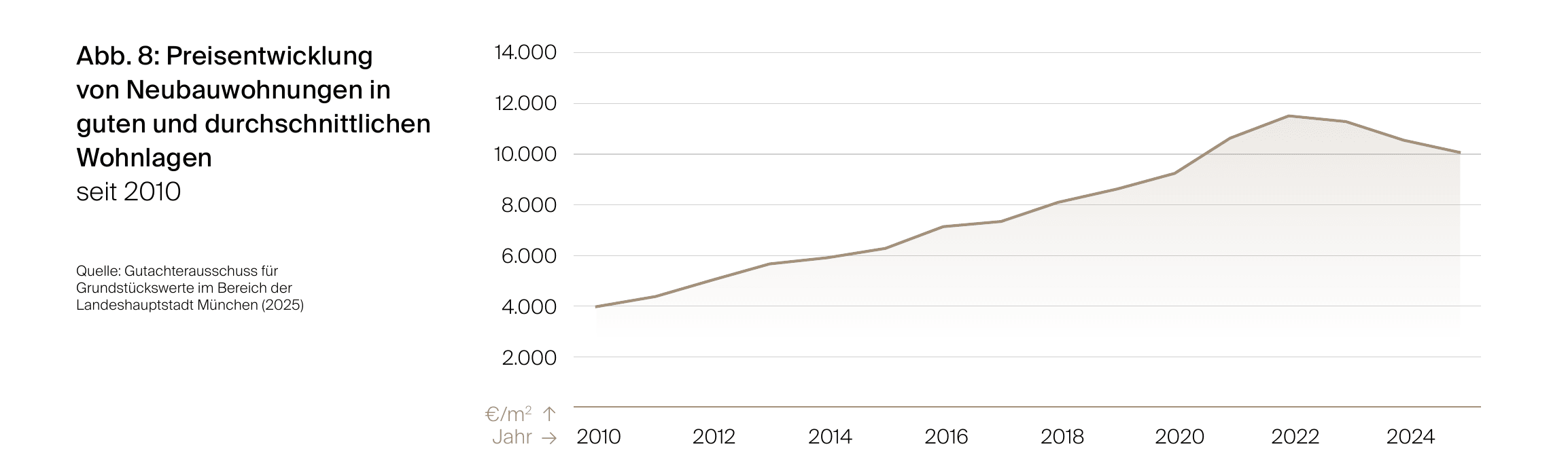
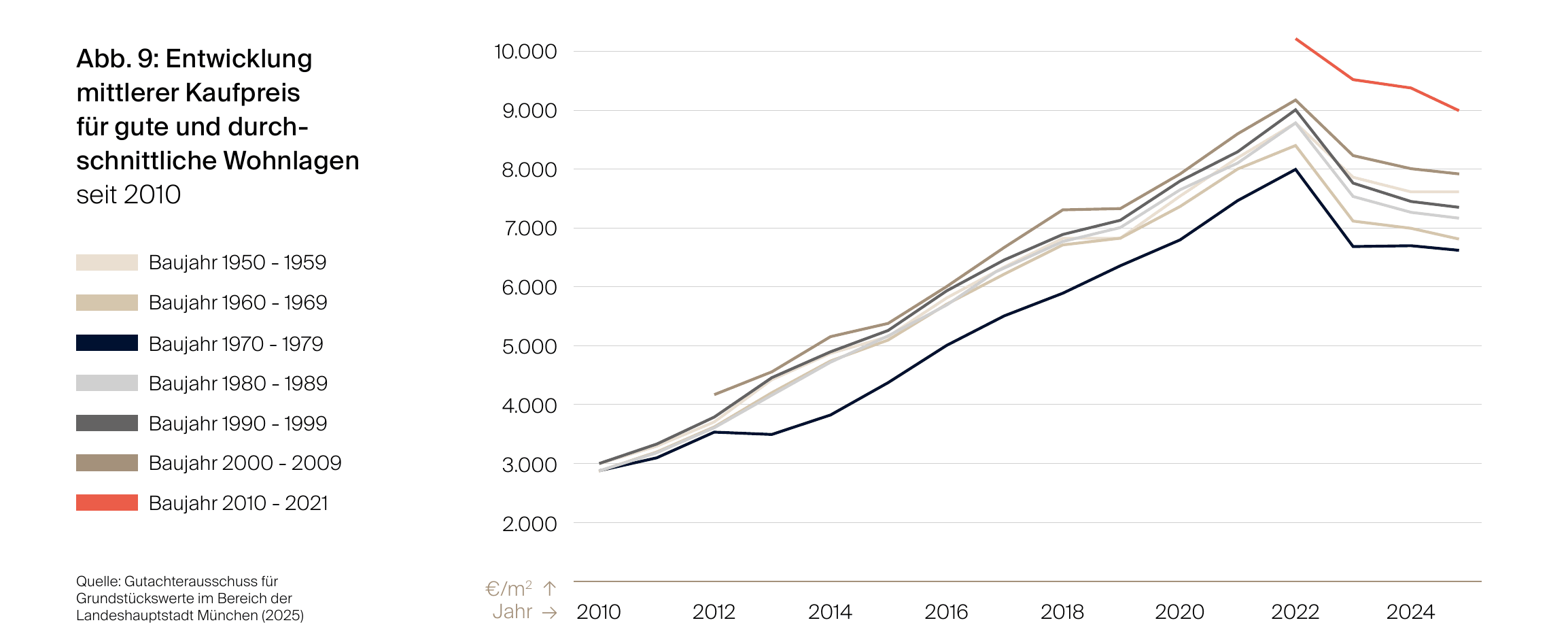
Price trends for owner-occupied flats have shown a noticeable correction since the peak around 2022. In the resale market, the correction began earlier, whilst prices for new-build flats initially remained at a high level for longer and only fell more sharply later on. Prices in the resale market have now levelled off. For new-build flats, this stabilisation of prices has yet to materialise.
Premium properties: Location remains a key factor
In the high-end residential segment, location remains a key factor. However, the individual quality of the property is decisive.
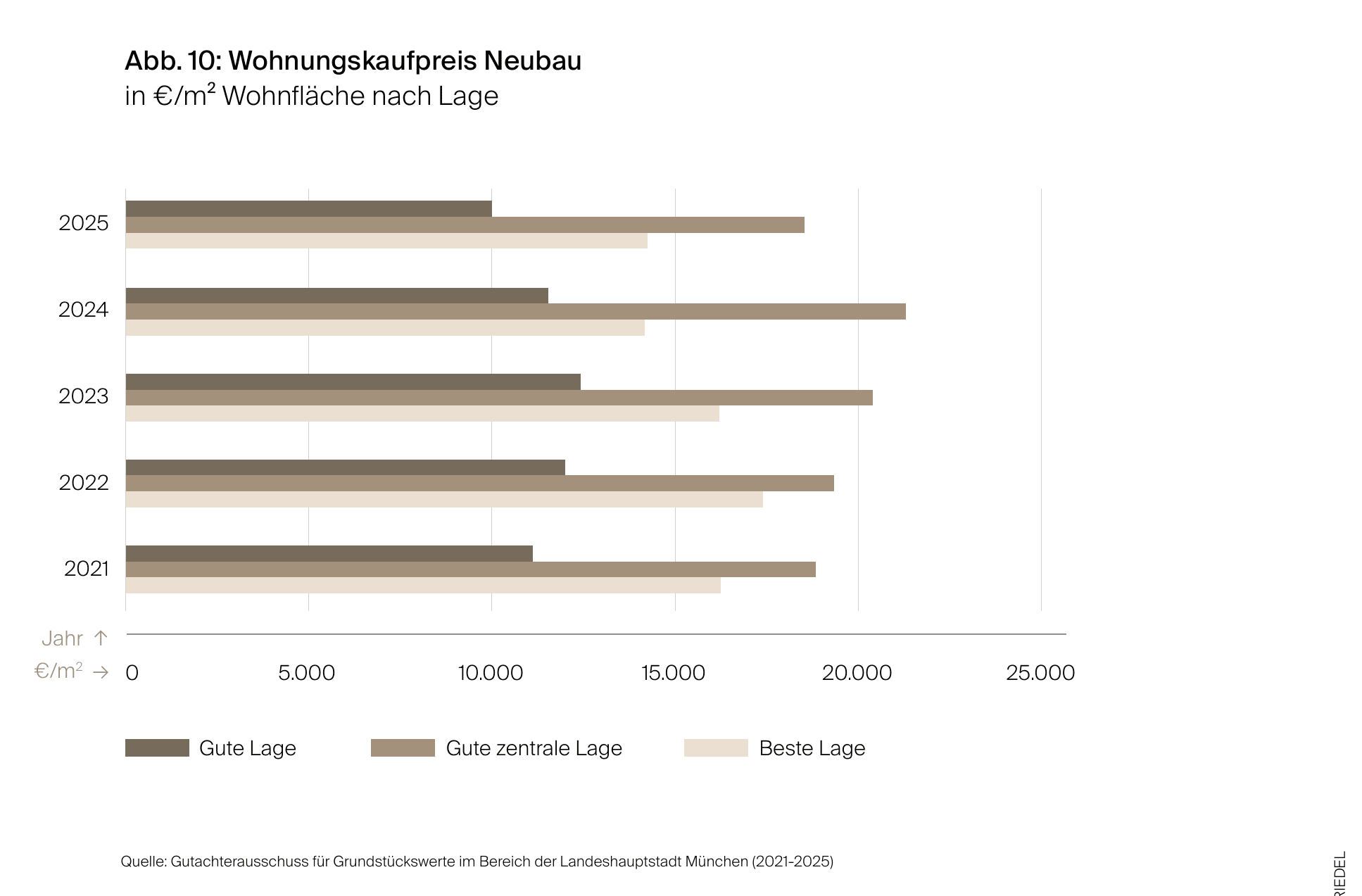
In the premium segment, price trends vary depending on location quality. New-build flats in good, good central and prime locations show significant differences depending on their location, and in some cases noticeable declines compared with the peak years.
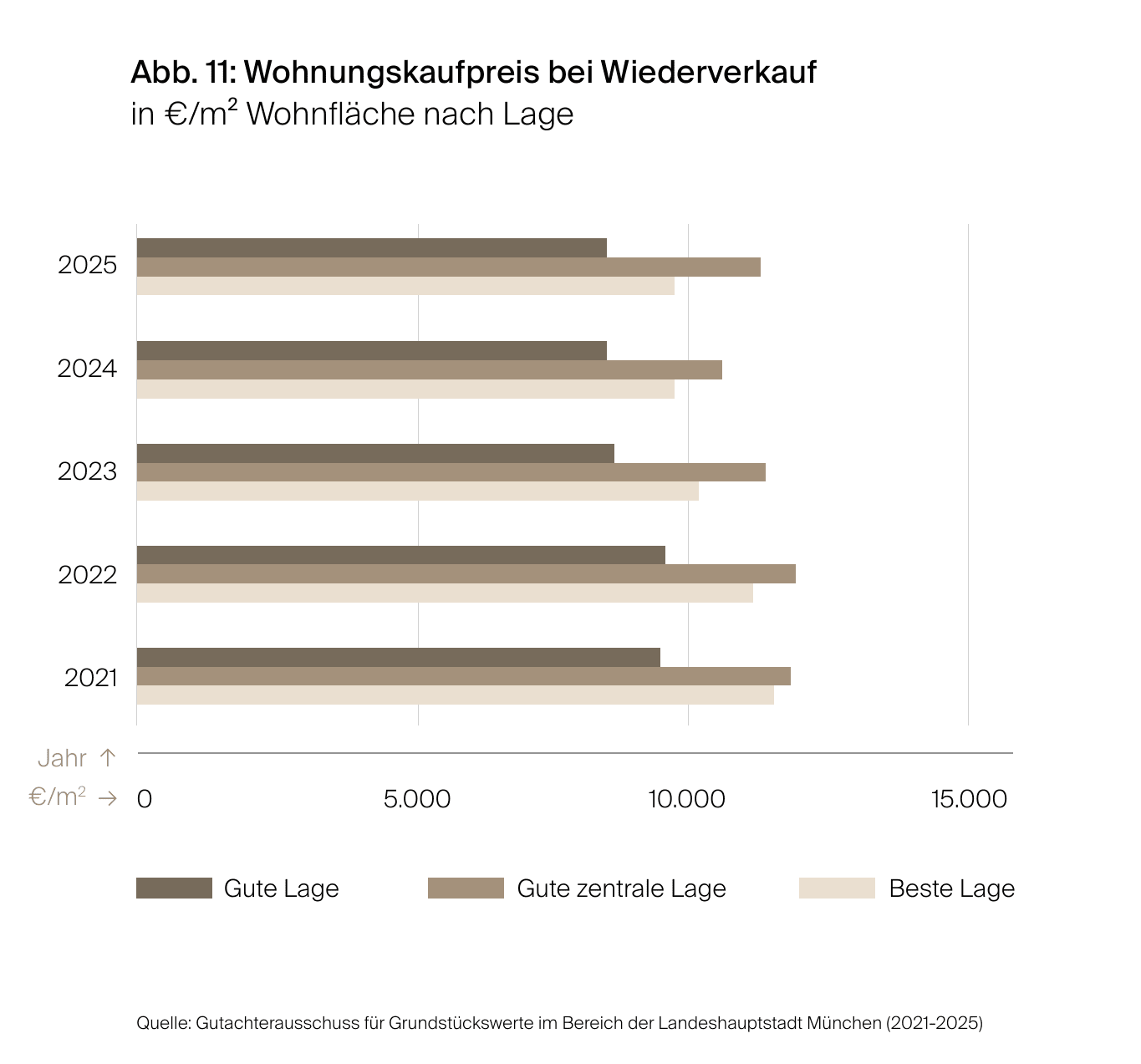
For resale flats, the trend is generally more stable. In good locations, the average price in 2025 remained unchanged compared with 2024. Good central locations saw year-on-year increases, whilst prime locations remained at the previous year’s level.
Houses in Munich: no consistent trend
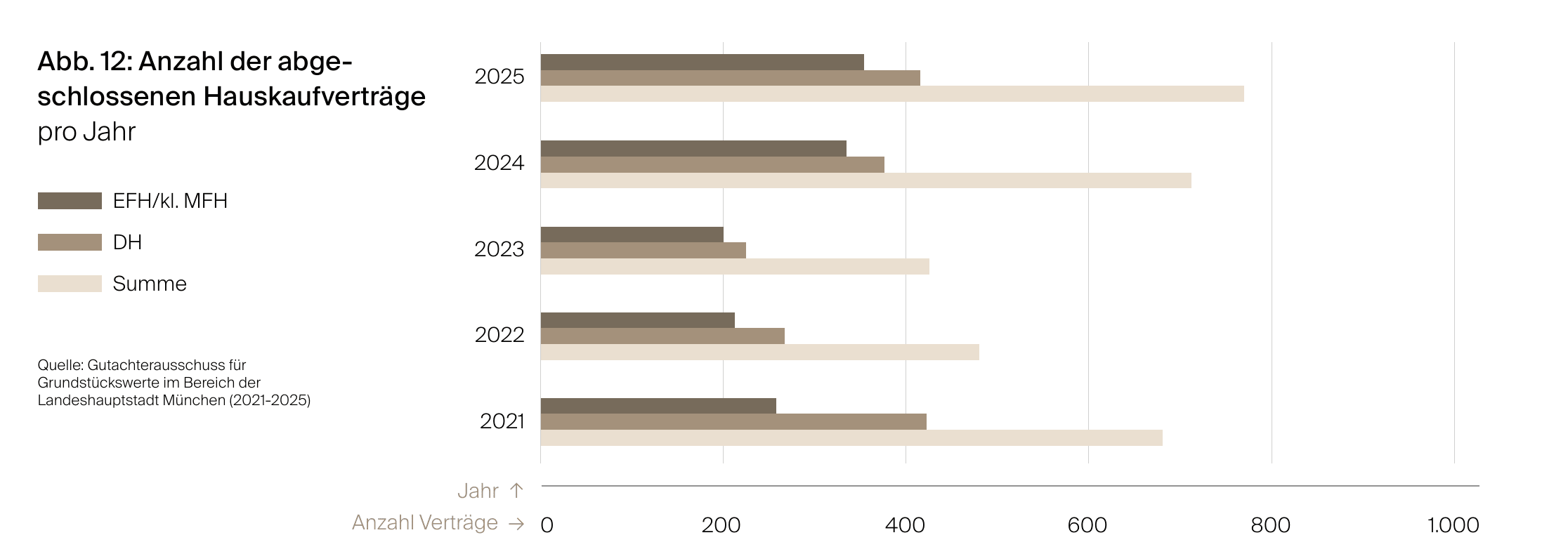
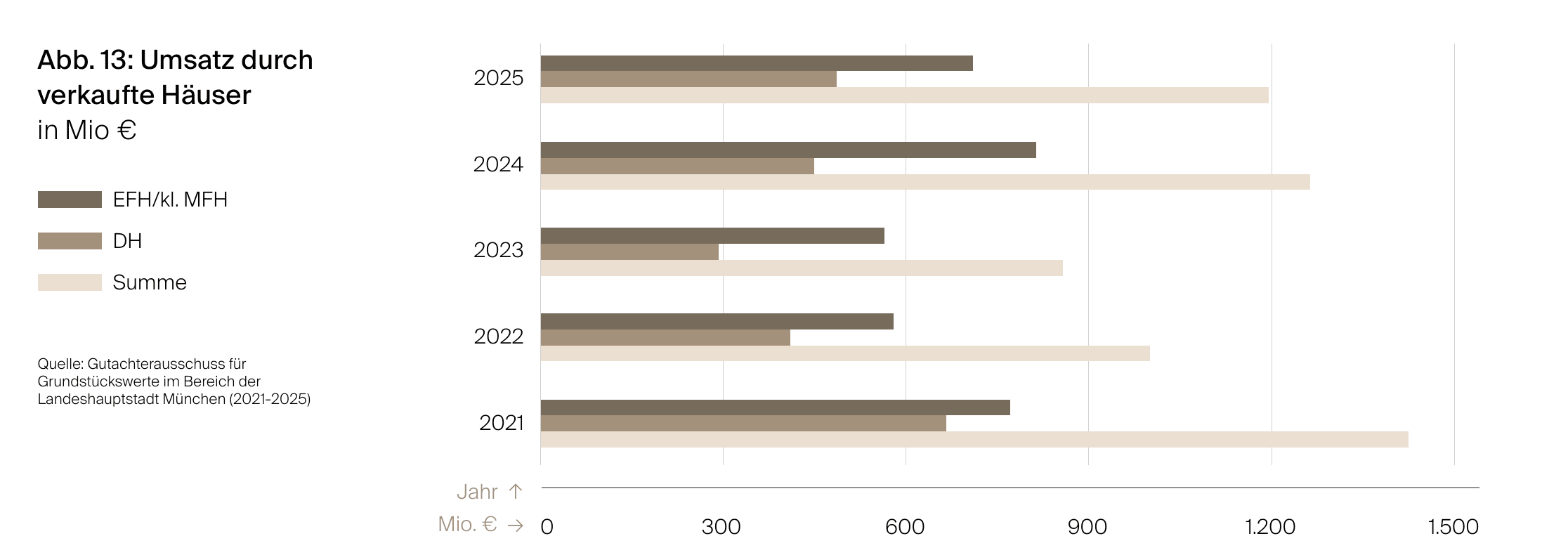
The market for detached houses, small apartment buildings and semi-detached houses saw a higher number of sales contracts in 2025. Whilst semi-detached houses also saw an increase in turnover, turnover for detached houses and small apartment buildings was lower than in the previous year. This trend points to increasing market activity, but not to a uniform trend in prices or turnover.
Wide price ranges in the high-end housing market
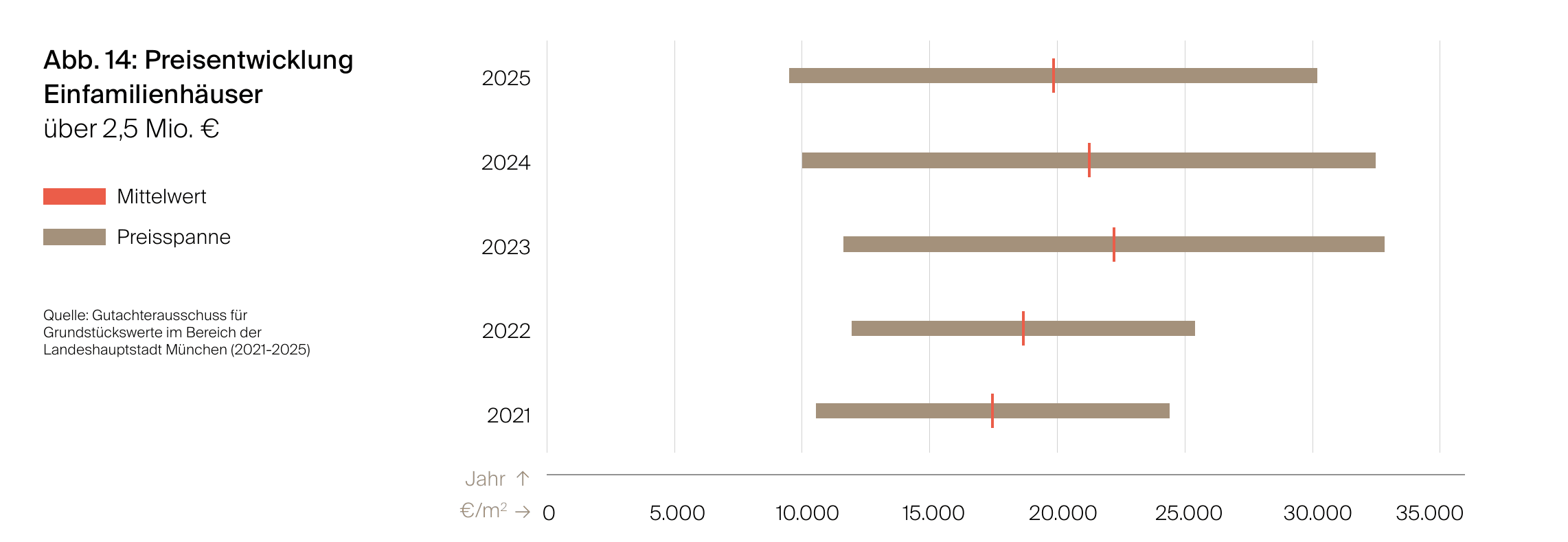
For detached houses priced at over 2.5 million euros, there is a wide range of prices per square metre, although a slight decline can be observed. The wide variation in prices illustrates just how significantly individual property characteristics can influence the value achieved.
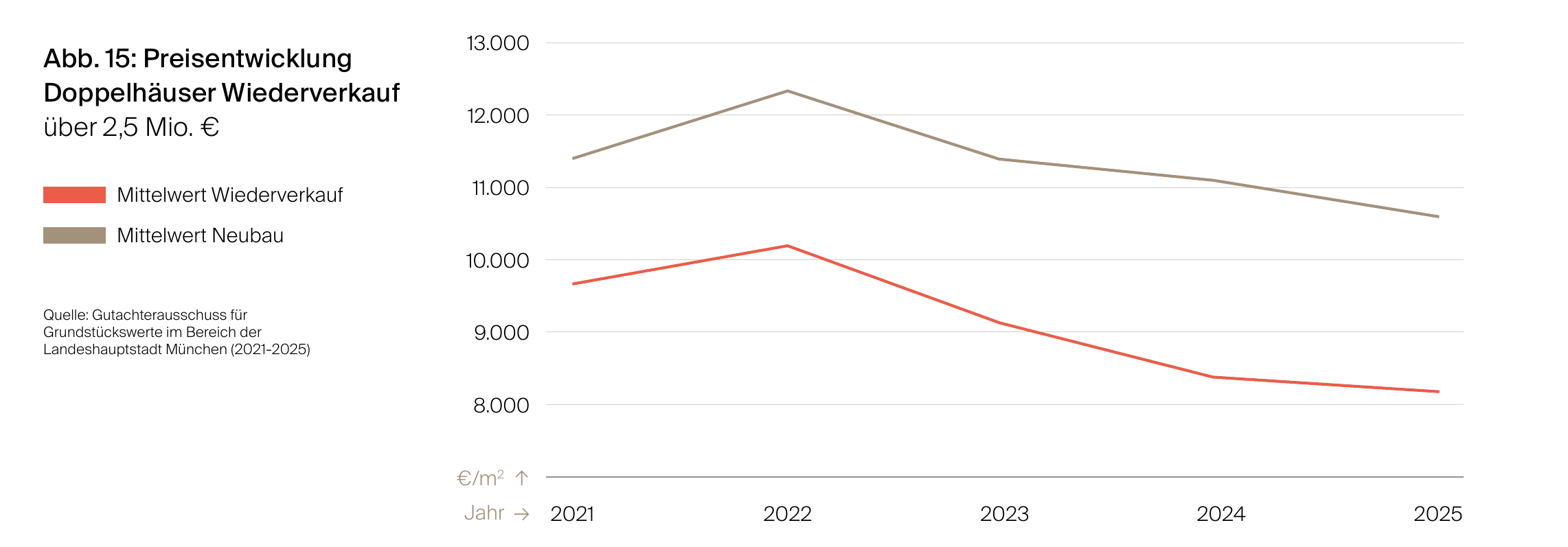
Semi-detached houses also showed lower price levels in 2025 than in previous years. Whilst prices on the resale market fell only slightly, the decline in the new-build segment was more pronounced compared with the previous year.
Plots of land in Munich: rising transaction volumes in a limited market
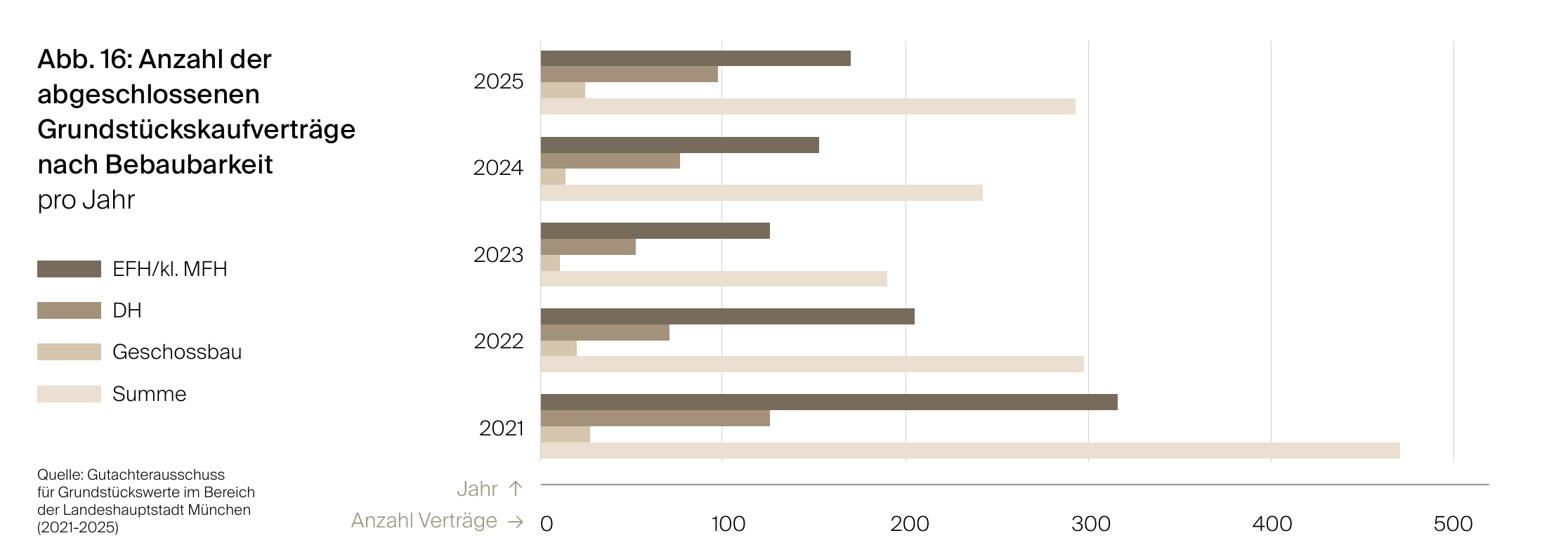
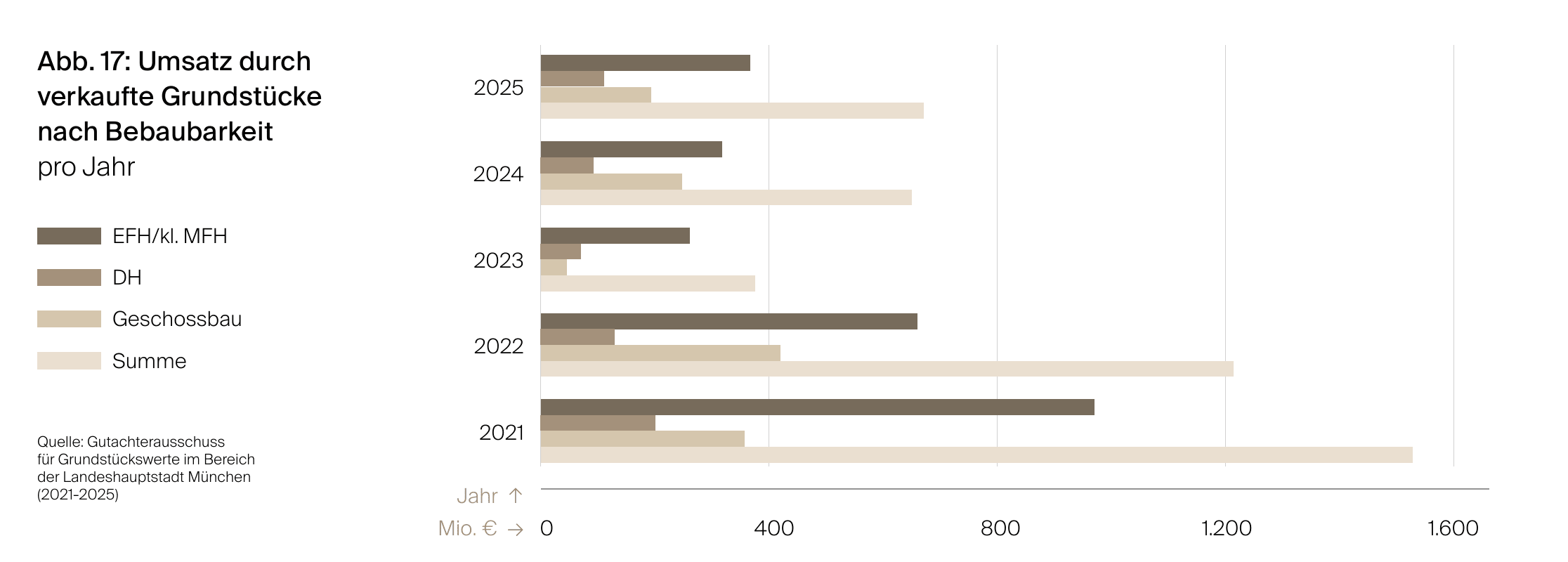
In 2025, plots changed hands more frequently once again. Turnover also showed a positive trend for detached houses and small apartment buildings. In the case of multi-storey residential buildings, the data remains of limited significance due to the small number of cases. In general, it should be noted that individual large transactions can have a significant impact on the annual figures.
Residential land prices on course to stabilise
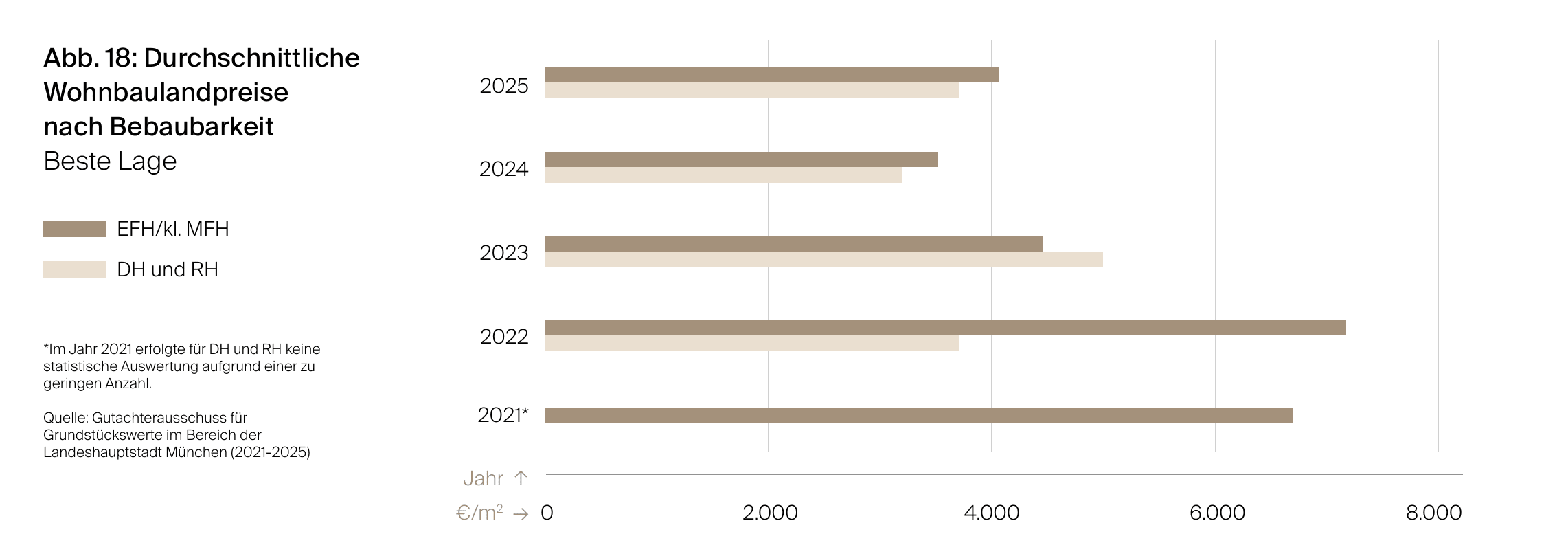
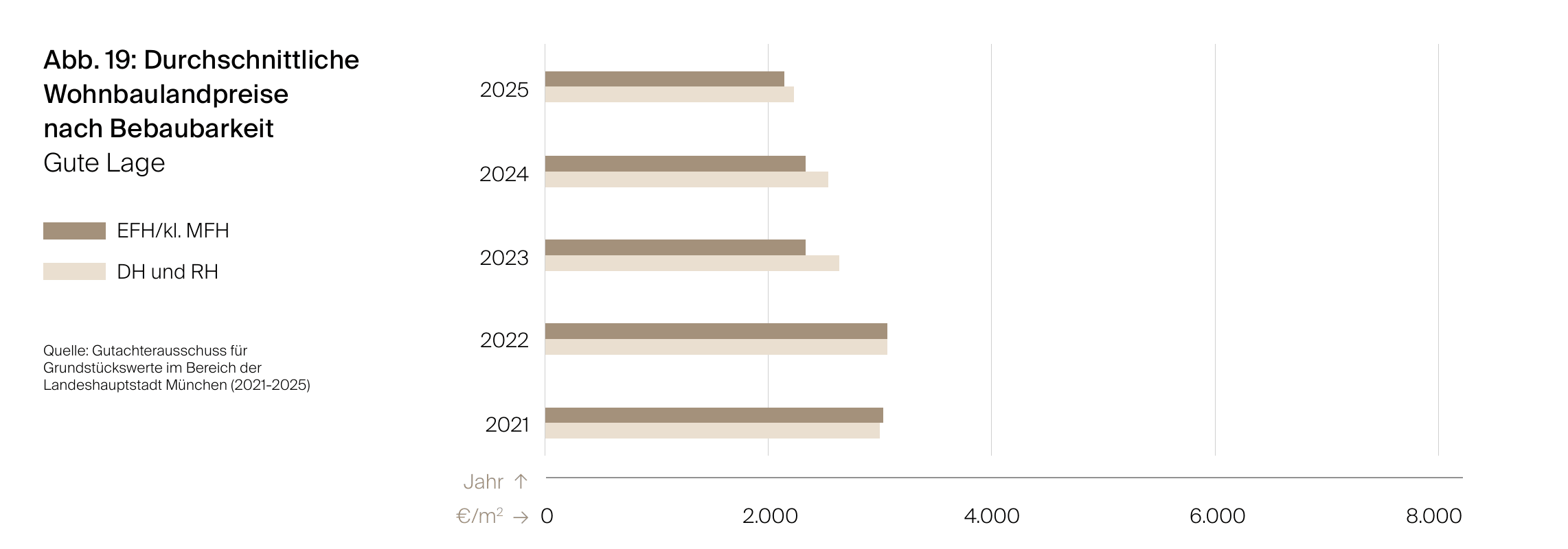
Average residential land prices are showing varying trends depending on location and plot category. In prime locations, higher average prices are expected in some cases by 2025, whilst prices in good locations appear to be stable or declining. However, given the small number of cases, no clear trend can be directly inferred from the available data.
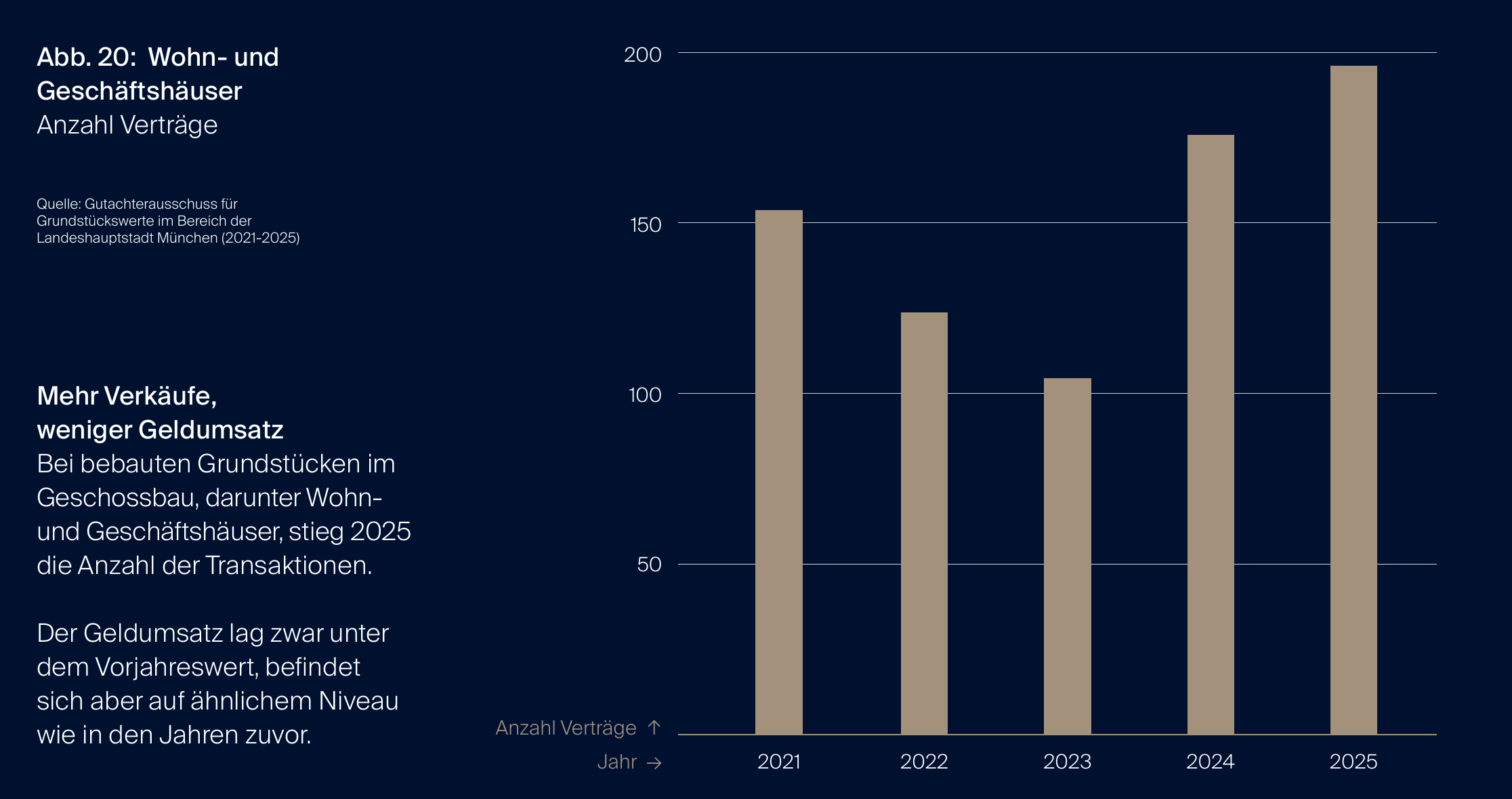
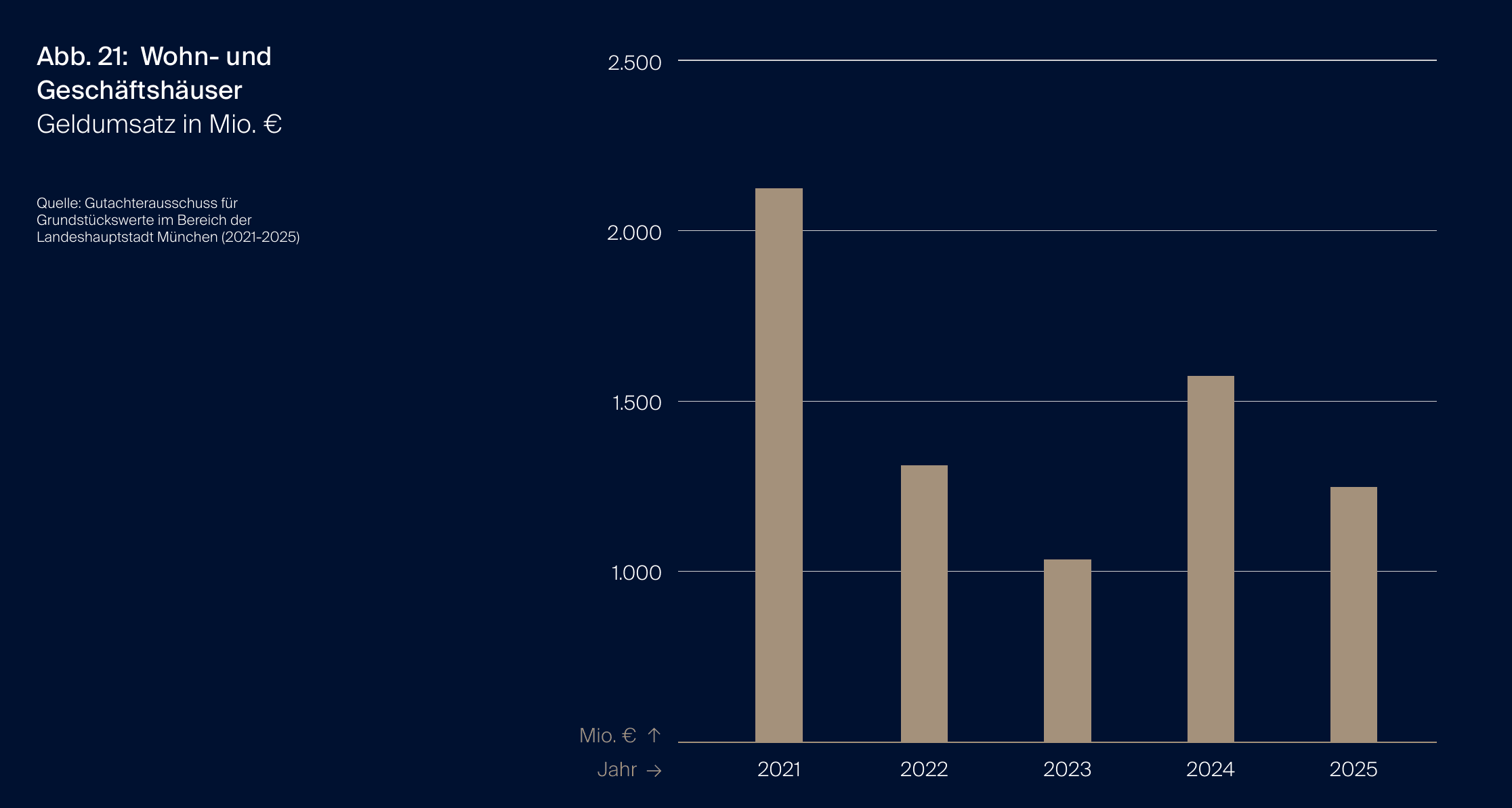
Residential and commercial properties: more sales, lower turnover
The number of transactions involving developed plots of land with multi-storey buildings, including residential and commercial buildings, rose in 2025. Although the turnover was lower than in the previous year, it remained at a similar level to previous years.
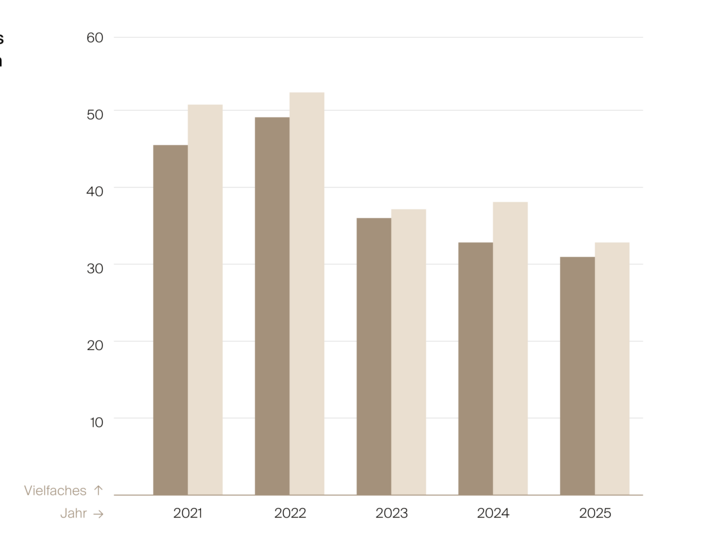
Multiple of the annual gross yield
The multiple of the annual gross yield indicates how many times the annual net rent (excluding service charges) is contained within the purchase price of a property. However, it serves as a rough indicator for assessing investment properties: the higher the multiple, the lower the calculated yield.
Trends over recent years show a marked decline in these multiples. This may suggest that buyers are demanding higher returns and are perhaps factoring in risks to a greater extent. A further significant adjustment is evident in 2025, particularly in locations close to city centres.
RIEDEL’s four business divisions
As a comprehensive platform for high-quality and luxury residential properties, we combine experience, market knowledge and excellence to help you make property decisions that stand the test of time.
RIEDEL Private
RIEDEL Private is our division specialising in the marketing of high-quality and luxury residential properties. Through our excellence in consultancy and marketing, as well as our trusted access to affluent buyer groups, our estate agents support and advise on high-value transactions, ensuring the best possible outcome is achieved in both sales and lettings.
RIEDEL Investment
RIEDEL Investment is our division specialising in the marketing of multi-family, residential and commercial properties with an income-generating character. With in-depth market knowledge, excellent advice and personal access to high-net-worth private clients, family offices and professional investors, we lay the foundations for high-value transactions that achieve the best possible outcome. Investors benefit from exclusive investment opportunities, personalised support and trustworthy execution – from a partner who understands both values and people.
RIEDEL THAN
The RIEDEL THAN division is the comprehensive partner for property developers in the design and marketing of high-quality new-build projects. We advise property developers on the design of ambitious residential property projects and market these exclusively to discerning owner-occupiers and institutional investors.
RIEDEL Finance
RIEDEL Finance is our independent service offering excellent advice and the implementation of financing solutions for property transactions. Our experienced advisers work with a select network of leading lending institutions, thereby securing optimal terms for bespoke construction financing. Through direct access to the property documentation, we streamline and simplify the loan application process for our buyers and investors. We treat sensitive financial data with the strictest confidentiality and keep it separate from the estate agency process.
Market Report 2026 (PDF)
The full report, ‘Munich City Market Report, 2026 Edition’, is available as a PDF – 40 pages, with all 24 illustrations in their original layout.
Your personal contacts
Do you have any questions about the market report or about the valuation of a specific property? Please contact us directly.


Bibliography
Data visualisation: All the diagrams shown are our own graphical adaptations based on the relevant data set.
- Deutsche Bundesbank, as at June 2026
- Europace AG, terms and conditions retrieved on 24 June 2026
- European Central Bank (ECB), as at June 2026
- Expert Committee on Property Valuations for the Munich Metropolitan Area, Property Market Report 2025
- Expert Committee on Land Values in the Munich Metropolitan Area, Property Market Reports 2021 to 2025
- Federal Statistical Office, as at June 2026
- IVD Süd, Analysis of Building Permits, January to October 2025
- City of Munich, Planning Forecast 2025–2045
Disclaimer: All copyright, usage and publishing rights are reserved. Any use is subject to prior consent. The editorial content has been carefully compiled. Nevertheless, no liability is accepted for the accuracy of information, references or any printing errors.
Munich City Market Report, 2026 Edition · Publisher and Editor: RIEDEL Immobilien GmbH, Königinstraße 11, 80539 Munich · Data as at 30 June 2026
Related topics
- Property valuation in Munich – what your property is worth in the current market
- Current standard land values in Munich – detailed official figures by district
- Estate agents in Munich – advice and marketing since 1982
- Luxury property in Munich – an overview of the premium segment