
Selling a house as part of a community of heirs — discreetly, fairly and in accordance with the law

Selling a house as a community of heirs: what co-heirs should clarify first
As soon as several heirs wish to, or are obliged to, sell a house, the first step is not the property itself, but reaching an agreement amongst themselves. Who wants to sell, who would prefer to keep it or move in themselves, and who needs cash in the short term? This initial situation determines how to proceed more than any market considerations. After all, without a common approach, the sale of a house by a community of heirs will not move forward.
It must also be clarified whether the line of succession has already been established. To sell the property, the heirs generally require a certificate of inheritance or a notarised will that has been opened, so that they can be registered as owners in the land register. Only then can a property be sold in a legally secure manner. At the same time, the factor of time plays a role: not every co-heir has the same timeframe, and some deadlines – such as tax deadlines – continue to run regardless of whether an agreement is reached.
A realistic valuation serves as the common basis for almost everything that follows. It sets out the terms of the discussion, whether for a sale on the open market or in the event that one heir takes over the shares of the others. That is why the valuation usually marks the starting point of the settlement of an estate, before decisions are made on price, method of sale and payment.
The legal framework: joint ownership, joint decision-making
Upon the opening of the succession, the house is not allocated to an individual but to the community of heirs as a whole (Section 2032 of the German Civil Code (BGB)). No one owns a specific floor or a defined share of the building; rather, each co-heir holds a share in the entire estate. This has a direct implication for any sale: in principle, the heirs can only dispose of the house jointly.
Requirement for consent: Who must sign?
The sale of the house constitutes a disposal of an asset forming part of the estate and requires the consent of all co-heirs (Section 2040 of the German Civil Code (BGB)). Every heir, regardless of the size of their share, must give their consent and co-sign the contract of sale. Even a single co-heir who refuses to go along with the sale can block a consensual sale, which is why reaching an agreement at the outset is so important.
Partition auction: a last resort
If the heirs cannot reach an agreement, the law provides for a partition auction as a means of dissolving the joint ownership (Section 180 of the Partition Act (ZVG)). Any co-heir may apply to the local civil court for this. The house is then sold at a compulsory auction and the proceeds distributed in proportion to each heir’s share. Whilst this approach is legally possible, it is rarely the most economically advantageous. Auction proceedings often fail to achieve the price that a carefully prepared private sale on the open market would fetch.
Right of first refusal of the co-heirs
If an individual heir sells not the house but their share of the estate to a third party, the other co-heirs are entitled to a statutory right of first refusal (Section 2034 of the German Civil Code (BGB)). They may step into the contract and thus prevent an outside buyer from becoming part of the community of heirs. In practice, however, the sale of individual shares in an estate to outsiders is the exception.
Payment to co-heirs: how the share is calculated
Whether the house is sold on the open market or one heir takes over the others’ shares: ultimately, it is a question of fair distribution. The amount each co-heir receives from the sale of a house within a community of heirs depends directly on the value of the property. If the property is sold on the open market, the purchase price realised – after deduction of any liabilities and costs – is divided up in accordance with the inheritance shares. If, on the other hand, a co-heir wishes to remain in the house, they pay out the others, and the appraised value then determines whether everyone feels they have been treated fairly.
This is precisely why a transparent valuation forms the basis of any fair settlement of an estate. It takes the edge off discussions, as there is no longer any dispute over figures that nobody can substantiate. Where a cash settlement amongst heirs is involved, or in a contentious situation, a formal market value valuation may be advisable instead of a market estimate – for example, if the value must stand up to scrutiny by the tax authorities or in court.
The ‘Property Valuation in Munich’ page explains in detail how a property is professionally valued and when a free initial estimate is sufficient. As a first step within the community of heirs, a market-based estimate is often enough to enable the co-heirs to discuss their payouts objectively in the first place.
The quickest way to achieve this is through an initial valuation: non-binding and free of charge for owners.
If co-heirs cannot reach an agreement: enforce the sale
When it comes to communities of heirs and the sale of a property, a consensual sale on the open market is almost always the better option for everyone involved. It allows for careful preparation, the property can be presented appropriately, and the timing of the sale can be chosen deliberately. This generally reflects in the outcome, without anyone coming under pressure.
Sometimes, however, a co-heir refuses to give their consent: because of an emotional attachment, a disagreement over the price, or simply because their expectations are too far apart. If the majority nevertheless wishes to force through the sale of the house within the community of heirs, the only legal recourse is the aforementioned partition auction. It is effective because any individual heir can apply for it and no one can prevent it on their own, but it involves considerable effort, takes time and usually results in a lower sale price.
Often, the mere possibility of a partition auction is reason enough to seek a joint solution after all. This is where our work comes in: we establish a robust basis for valuation at an early stage and a process that is transparent to all, so that contentious issues do not escalate in the first place and legal proceedings are usually avoided. We market the property in a structured manner and, where the situation requires, discreetly. We do not use the personal pressure faced by the heirs as a selling point.
The RIEDEL sales process: Facilitation from valuation to completion
A sale within a community of heirs depends as much on the understanding between the parties involved as on the property itself. That is why our support does not begin with the property, but with the people. It follows a clear five-step process:
- Initial meeting with all co-heirs. All parties involved come together so that objectives, concerns and timeframes can be discussed openly.
- Valuation. A market-based valuation establishes a common financial basis for all subsequent decisions. Further details can be found on the page ‘Property Valuation in Munich’.
- Mediation between the co-heirs. We mediate between differing interests and ensure the process remains transparent for everyone, so that decisions are sustainable.
- Marketing. The property is carefully prepared and, depending on the community’s wishes, marketed either publicly or discreetly to suitable buyers.
- Notarisation and payment. The sale becomes legally binding at the notary’s appointment, and the proceeds are distributed according to the inheritance shares.
The ‘Selling a House in Munich’ page provides a more detailed overview of the general process and what is important to bear in mind. Here, the focus is on the specific situation involving multiple heirs.
There are good reasons why this support is professionally sound: RIEDEL is a family-run business based in Munich since 1982, a member of the IVD property association and awarded ‘Estate Agent of the Year 2025’ (Bellevue). The team includes property economists (IRE|BS) as well as experienced valuers, and as part of the international property network of Christie’s International Real Estate, our reach extends beyond the region when necessary. We operate in Munich and the Fünfseenland region, with branches in Munich and the surrounding area. As inherited properties are located throughout the city and beyond, our work is not restricted to any single location.
Notary appointment and notarisation: the sale becomes legally binding
In Germany, the sale of a property must be notarised. This applies equally to a community of heirs and to a sole owner. However, there is a special provision regarding the appointment with the notary when selling a house as part of a community of heirs: as a general rule, all co-heirs must sign the contract of sale. Anyone who is unable to attend may be represented by a notarised power of attorney, so it is not essential for everyone to be present at the same time.
The notary reads out and certifies the contract, arranges for the registration of the priority notice of transfer in favour of the buyer, and ensures that the purchase price is only paid once the agreed conditions have been met. The purchase price becomes due after the appointment and is usually paid into an account from which it is distributed to the heirs in accordance with their respective shares. A prerequisite for all this is that the heirs are registered as owners in the land register, which is why proof of inheritance should be clarified at an early stage.
Taxes and documentation when selling an inherited property
Tax implications need to be taken into account at an early stage when heirs sell an inherited property. Two aspects need to be distinguished here: inheritance tax, which relates to the acquisition of the property through inheritance, and a possible capital gains tax, which applies to the profit from a subsequent sale. Both regularly raise questions when selling a house following an inheritance, but these can be clarified with a little advance planning.
Capital gains tax on inheritances
The capital gains tax depends on the length of time the property has been held. In the case of inherited property, the heir assumes the position of the deceased, meaning that the deceased’s date of acquisition is taken into account. If more than ten years have elapsed between the original acquisition by the deceased and the sale, any capital gain is generally tax-free. Continuous owner-occupation may also be a factor. As each case is assessed on its own merits and as time limits and allowances vary, the finer details should be left to the experts.
The tax liabilities a community of heirs must factor in when selling a house therefore depend heavily on the specific circumstances. The ‘Property & Taxes’ guide provides an in-depth overview of time limits, tax allowances and options for structuring the transaction.
What documents you need
Certain documents are essential when selling an inherited property. These include proof of inheritance (a certificate of inheritance or a notarised will that has been opened), a current extract from the land register for flats, the declaration of division, and the energy performance certificate. Floor plans, a calculation of living and usable floor space, and evidence of any modernisation work are also helpful. If one or two of these are missing, it is not a problem. We will advise you on what can be obtained and what is actually required for each stage of the process.
Inherited properties sold by our practice
The best way to illustrate how the settlement of an estate works in practice is through specific case studies: anonymised, but illustrative.
Furthermore, the following module automatically incorporates sold properties in Munich.

![A Light-Filled Living Space]()
![Bright kitchen with built-in appliances]()
![Bright Bedroom]()
![Spacious balcony]() Munich – NeuhausenLiving approx. 61 m² – 2 roomssold

![A Light-Filled Dining Area]()
![High-quality built-in kitchen with access to the balcony]()
![Sunny southwest-facing balcony]()
![Charming Living Area]()
![Entryway with built-in features]()
![A Charming Retreat]()
![Guest area with built-in dressing room]() Munich – MaxvorstadtLiving approx. 123 m² – 4 roomssold
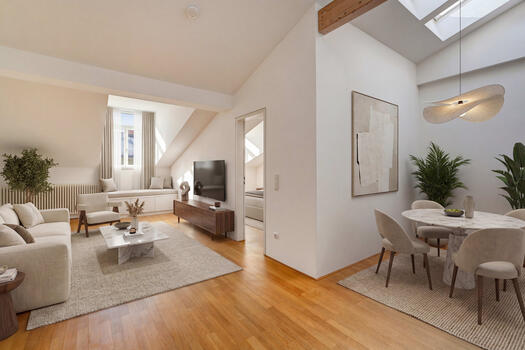
![Cozy living room (virtually furnished)]()
![A beautiful bedroom (virtually furnished)]()
![Roof terrace with privacy]()
![Spacious bedroom]()
![A sun-drenched atmosphere thanks to skylights]()
![Kitchen in front of the roof terrace]()
![Well-kept daylight bathroom]() Munich – Isarvorstadt / Glockenbach districtLiving approx. 69 m² – 2 roomssold
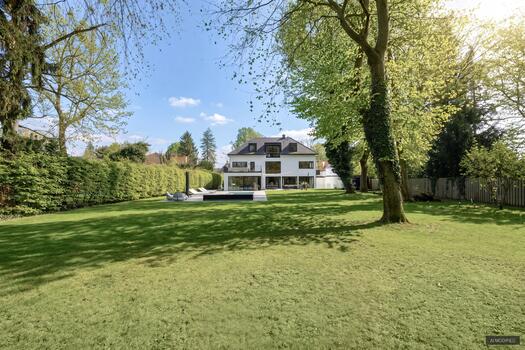
![Stunning family home in a quiet, well-maintained, and family-friendly neighborhood]()
![Inviting Entrance Hall]()
![Breathtaking open space above the dining area]()
![Elegance and Abundance of Light]()
![Fitted kitchen by Molteni&C with an adjoining lounge area]()
![Cozy lounge area]()
![Stylish interior design]() Munich – prime location right on the high banks of the IsarPlot 1.825 m² – Living approx. 579 m²sold

![Uneinsehbare Dachterrasse]()
![Repäsentatives Wohnen (virtuell möbliert)]()
![Großzügigkeit und Lichtfülle]()
![Helles Wohnambiente (virtuell möbliert)]()
![Ideal geschnittene Räume]()
![Raumhöhen bis 3,80 Meter]()
![Einbauküche von 2020]() Munich – Schwabing / near Münchner FreiheitLiving approx. 209 m² – 5 roomssold

![Private Rooftop-Terrasse]()
![Exklusives Ambiente mit Kamin (virtuell möbliert)]()
![Großzügiger Wohnbereich mit Blick ins Grüne]()
![Durchdachter Grundriss]()
![Unverbaubare Panoramablicke auf dem Südbalkon]()
![Stylische Einbauküche mit Kochinsel]()
![Exklusive, hochwertige Ausstattung]() Munich – Maxvorstadt / StiglmaierplatzLiving approx. 111 m² – 3 roomssold


Frequently asked questions from co-heirs

Discuss your concern with me directly and easily by phone. You can reach me Monday to Friday from 9:00 a.m. to 6:00 p.m., and Saturday from 10:00 a.m. to 2:00 p.m.
Leave me your number and I will call you back promptly.
Make a personal appointment with me for a detailed conversation on site.
Legal and tax information
The information on this page is provided for guidance only and does not constitute legal or tax advice in specific cases. Legal provisions relating to the community of heirs and tax matters depend on the specific circumstances and should be clarified with a solicitor, notary or tax adviser.
Further topics for heirs and owners
We cover related topics in detail on separate pages.
- Property valuation in Munich – how the value is determined and when a valuation report is required.
- Selling a house in Munich – the sales process in detail.
- Selling a house in Bogenhausen – selling in the neighbourhood when the inherited property is situated in a specific part of Munich.
- Selling property in Munich – an overview of our services for owners.
- Property & Taxes – Deadlines, tax allowances and tax planning.
- Estate agents in Munich – how we work and what we stand for.